What if the most extraordinary church in Egypt isn’t inside a grand cathedral — but quietly suspended in mid-air above a 2,000-year-old Roman fortress, in a neighborhood most tourists never find?

Most visitors come to Cairo for the Pyramids. But the ones who discover the Hanging Church — tucked away in the ancient lanes of Coptic Cairo — often leave calling it the highlight of their entire Egypt trip. This is one of those rare places where three civilizations overlap in a single building: Roman military engineering below, Coptic Christian devotion in every icon and column, and over a millennium of living, breathing worship that continues to this day.

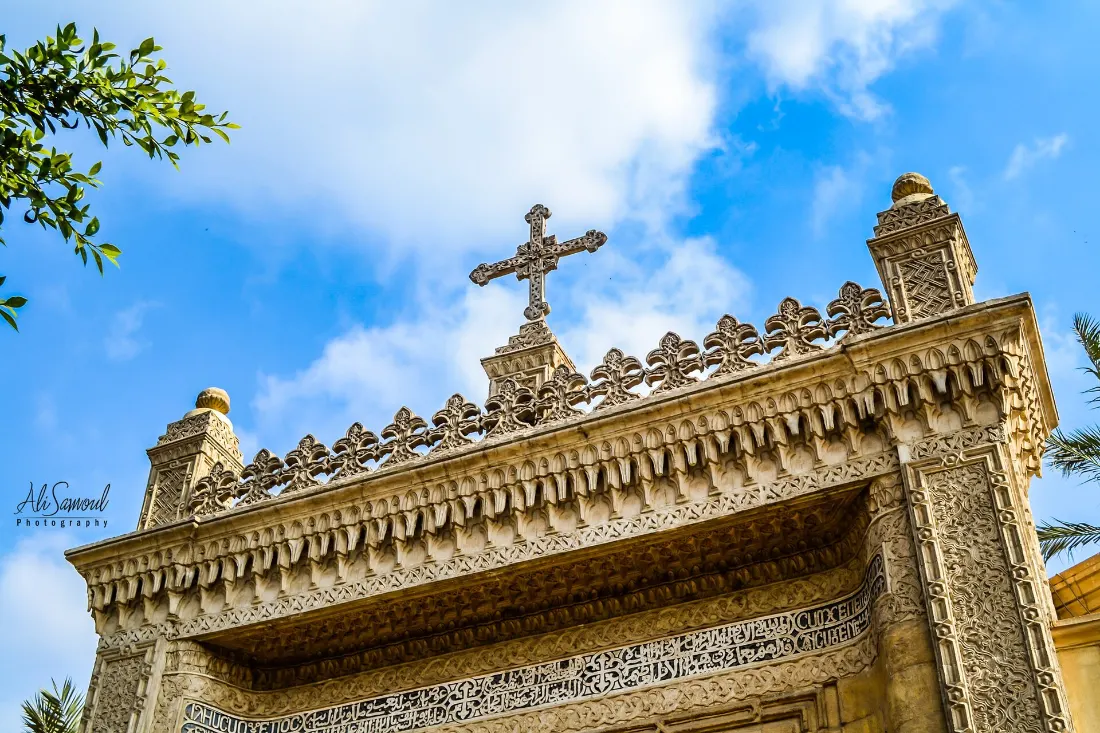
Known in Arabic as Al-Muallaqa — “The Suspended One” — the Hanging Church in Cairo is officially called the Church of the Virgin Mary. It sits atop the southern gatehouse of Babylon Fortress, the great Roman citadel that predates Islam in Egypt by centuries. When it was first built, the ground was six meters lower than today, meaning the church genuinely appeared to float above the city — a breathtaking sight that earned it its enduring name.

3rd C.Original church on this site
110 Ancient Coptic icons inside
29 Steps to the church entrance

Why Is It Called the Hanging Church?

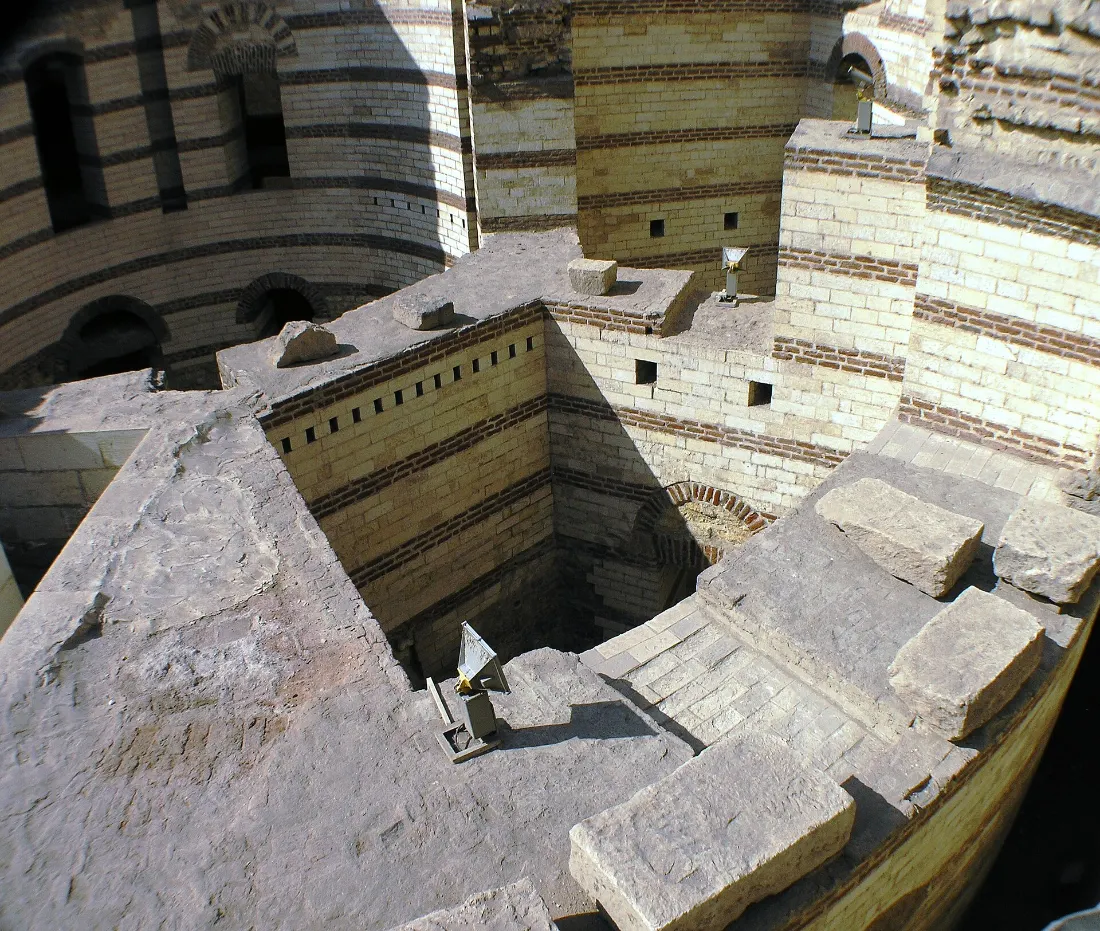
This is genuinely the first question every visitor asks — and the answer is more interesting than most guides let on. The Hanging Church does not hang from anything. Instead, its nave is built over the passage of the southern gatehouse of Babylon Fortress, with the church’s structure resting on two massive cylindrical Roman towers. In the 3rd century AD, when the first church was erected here, the ground level outside was roughly six meters lower than it is today — centuries of settlement, debris, and flooding have buried the Roman towers almost entirely.

To visitors arriving in ancient times, the church appeared to genuinely levitate above the city gates — a powerful visual statement of Christian faith rising literally and symbolically above the might of Rome. Today, the land has risen so much that you approach the church up 29 stone steps, and only narrow slits cut into the floor of the narthex reveal the Roman towers hidden beneath. Crouch down and look through those floor slits — it’s one of the best hidden moments in all of Old Cairo, and most visitors walk right past them.

The name “Staircase Church”: Early European travelers who visited Cairo in the medieval period didn’t call it the Hanging Church at all — they called it “the Staircase Church,” referring to the dramatic flight of steps leading to its entrance. The Arabic name Al-Muallaqa only became universal after Arab geographers adopted it in the 10th century.

A History Most Guides Don’t Tell You

Exclusive depth — not covered by most competitors

The standard story of the Hanging Church begins in the 3rd century and jumps quickly to its role as the Coptic Patriarch’s seat. But the full history is far more turbulent — and far more revealing about Egypt’s extraordinary layered identity.

3rd–4th Century AD

A small church is built within Babylon Fortress, likely serving as a place of worship for Christian soldiers garrisoned there. Carved reliefs from this period closely resemble those of early Syrian churches — suggesting the first community here may have had roots in the Levant.

7th Century (690s AD)

The current structure is built under Patriarch Isaac. The church is constructed in the basilican style — possibly the first in Egypt to use this architectural form, which would later define Christian ecclesiastical architecture worldwide.

840 AD — The Mosque Chapter

This is the part most guides skip. The governor Ali ibn Yahia the Armenian partially destroyed the church during a conflict with Patriarch Anba Yusab. The church was subsequently converted into a mosque for several decades — before being returned to the Coptic community in the 10th century and reconsecrated. This period of conversion and restoration reflects the volatile coexistence of faiths in medieval Egypt.

975–978 AD

Pope Abraham commissions a major restoration. According to Coptic tradition, the Virgin Mary appeared to him in a dream connected to the Miracle of Mokattam Mountain — an event still celebrated in Coptic memory and directly linked to the church’s spiritual significance.

1047 AD — The Patriarchal Move

The seat of the Coptic Pope is formally moved from Alexandria to the Hanging Church — a seismic shift in Coptic institutional power reflecting the political reality that Egypt’s center had moved from Alexandria to Cairo. The church served as the Patriarchal residence for nearly 300 years, making it the administrative heart of Egyptian Christianity.

1047–1300s

Patriarchal elections, Easter date calculations, heresy trials, the consecration of holy oils, and papal burials all take place within these walls. The Hanging Church becomes the most politically significant Christian building in Africa.

1983 & 1992

In 1983, the chapel ceiling collapses after an engineer removes a structural column, damaging irreplaceable artwork. The 1992 Cairo earthquake causes further structural damage. A restoration lasting from 1998 to 2011 stabilizes the building and conserves what remains of the original decoration.

Inside the Hanging Church: What to Look For

The interior of the Hanging Church rewards slow, attentive visitors. Don’t rush through — every element carries layered meaning that most people miss entirely.

The 13 Marble Columns — and the One That Reveals a Traitor

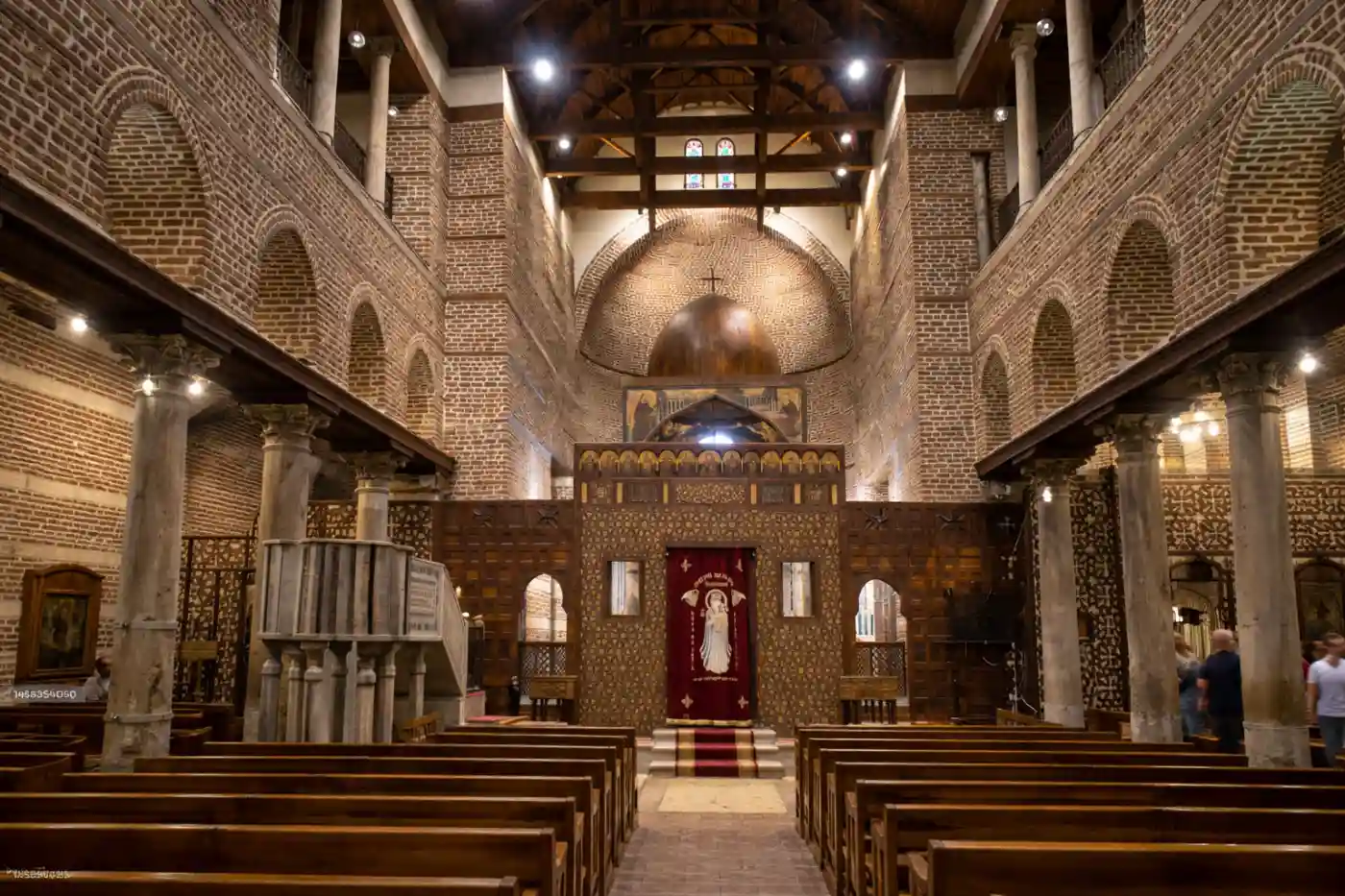
The central nave is lined with 13 marble columns, each representing one of the 13 figures at the Last Supper: Jesus and his twelve disciples. But look carefully — one column is noticeably darker than the rest. That is the pillar of Judas Iscariot. A second column, slightly grayer than the others, represents doubting Thomas. This is not modern interpretation — it is a deliberate, centuries-old theological statement embedded in the architecture itself.

The Noah’s Ark Ceiling

Look up. The timber roof of the nave is shaped to evoke the hull of Noah’s Ark — a deliberate theological statement placing worshippers “inside” the vessel of salvation. This architectural metaphor was common in early Christian church design, but the Hanging Church’s version, with its dark carved beams and gentle arc, is among the finest surviving examples in the entire Middle East.

The Ivory and Ebony Sanctuary Screen

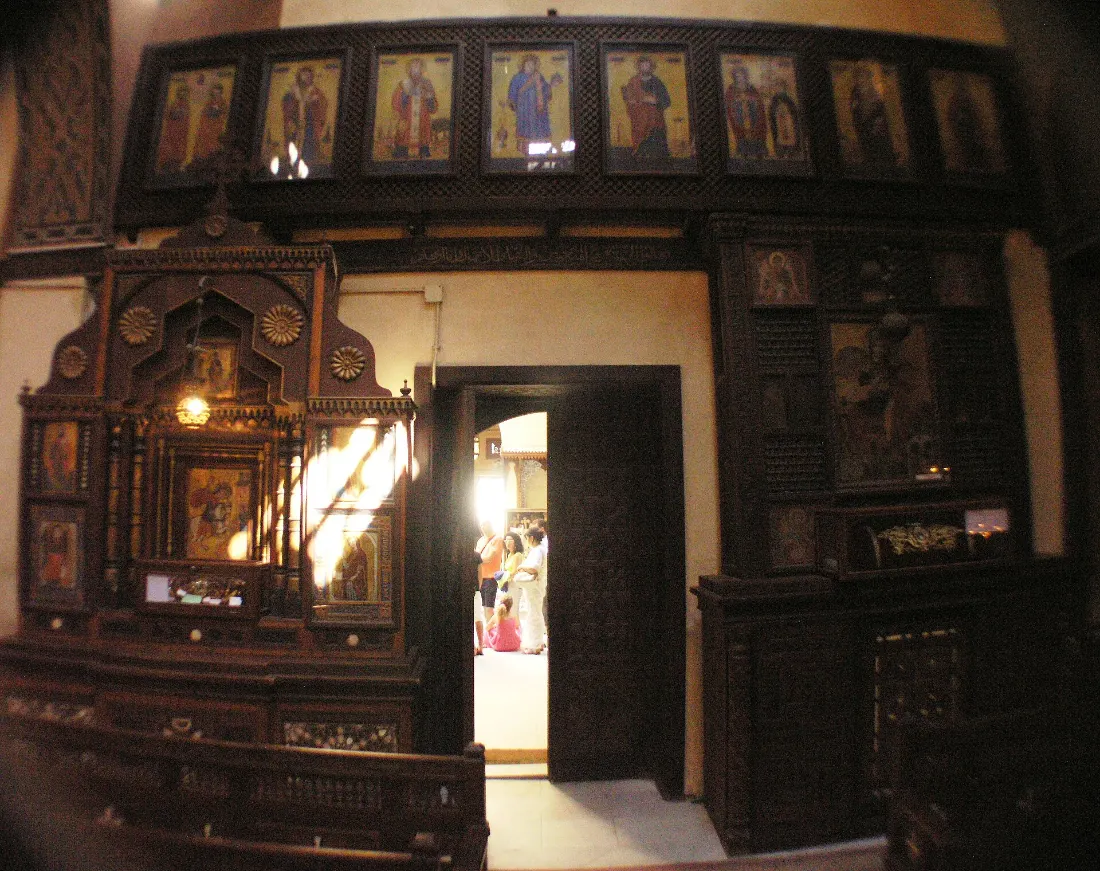
The altar screen — the ornate partition separating the nave from the sanctuary — is made of cedar wood inlaid with ivory and ebony in intricate geometric patterns. This is Coptic craftsmanship at its absolute peak. The patterns appear Islamic in influence but predate most comparable Islamic woodwork, raising fascinating questions about the cross-cultural artistic exchange between Egypt’s Christian and Muslim communities.

The Icon Collection — 110 Paintings, One Dating to the 8th Century

The walls are adorned with 110 Coptic icons, spanning 12 centuries of artistic tradition. The oldest dates to the 8th century and depicts the Virgin Mary, Jesus, and John the Baptist. Here is something competitors don’t mention: Coptic icon painting deliberately uses a flattened, frontal style — figures stare directly at the viewer — because Coptic theology holds that the saint is genuinely present in the image, looking back at the worshipper. This is not primitive art; it is a sophisticated theological statement about presence and witness.

Photography tip (exclusive): The icons are best photographed in the mid-morning when natural light filters through the high clerestory windows from the east, creating a warm, golden illumination without harsh shadows. Flash photography is discouraged near the ancient icons — and rightly so. Come between 10am and 11am on a weekday for the best light and the fewest crowds.

The Hidden Roman Towers Beneath Your Feet

In the narthex (the entrance hall), look for the narrow rectangular slits cut into the marble floor. Peer down through them and you are looking at the tops of the Roman towers of Babylon Fortress — still standing below, buried under centuries of Cairo. Most visitors walk over them without knowing. This is arguably the most visceral experience of layered history in the entire city.

The Oldest Living Language in Egypt — Still Spoken Here

Rarely covered by other travel guides

If you arrive during a service at the Hanging Church, you will hear something remarkable: the Coptic language. Coptic is the final stage of the ancient Egyptian language — the language of the Pharaohs, written in a modified Greek alphabet after the conversion to Christianity. It is no longer spoken as a native tongue in daily life, but it has survived for two thousand years as the liturgical language of the Coptic Orthodox Church, preserved in prayers and hymns chanted in the same space where it has been heard since the first century of Christianity in Egypt.

Standing in the Hanging Church during a Coptic Mass — listening to a language descended directly from the words spoken in the temples of Karnak and Luxor — is an experience unlike anything else in Cairo. The connection between ancient Egypt and modern Coptic Christianity, so easy to intellectualize, becomes tangible and immediate in that moment.

When are Coptic masses held? Masses are held at the Hanging Church on Wednesdays and Fridays from 8:00 AM to 11:00 AM, and on Sundays from 9:00 AM to 11:00 AM. Visitors are welcome to observe respectfully. Dress modestly and enter quietly during the service.

Practical Visitor Guide — Everything You Need to Know

OPENING HOURS

Daily: 9:00 AM – 5:00 PM
Open every day of the week. Arrive before 10:00 AM to avoid tour groups. The church may be briefly closed during services — wait outside and you will be welcomed in after.

ENTRANCE FEE

Free Entry
There is no entrance fee. Donations are welcome and appreciated. The nearby Coptic Museum charges a separate admission fee and is worth the extra visit.

DRESS CODE

Modest attire required
Shoulders and knees should be covered for both men and women. Scarves are available at the entrance if needed. This is an active place of worship — dress and behave accordingly.

HOW TO GET THERE

Mar Girgis Metro Station
Take Cairo Metro Line 1 to Mar Girgis station. The Hanging Church is a 3-minute walk from the exit. This is the easiest and most reliable way to reach Coptic Cairo — far better than navigating by taxi in traffic.

Best Time to Visit

Arrive at 9:00–10:00 AM
Before large tour groups arrive. The church feels completely different when quiet — the incense, the light, the silence are extraordinary.
October to March
Cairo’s mild season. Walking between Old Cairo sites is comfortable. Avoid July–August when heat makes outdoor exploration difficult.
Weekday mornings
Fridays and Sundays bring more worshippers. Weekday visits (Tue–Thu) offer the most peaceful experience for cultural tourists.
Avoid January 7th
Coptic Christmas (January 7) brings enormous crowds. Beautiful to witness, but expect very limited access inside the church itself.
Insider tip from El Sultan Travel guides: Most visitors spend 20 minutes at the Hanging Church. Plan for at least 45 minutes — and combine it with the Coptic Museum next door, the Church of Saints Sergius and Bacchus (where tradition says the Holy Family rested), and the Ben Ezra Synagogue. Done properly, Coptic Cairo is a half-day itinerary that rivals the Pyramids for sheer depth of experience.

What to See Near the Hanging Church

The Hanging Church sits within one of Cairo’s densest concentrations of ancient sites. Don’t visit in isolation — a half-day in Coptic Cairo covers all of the following within easy walking distance:

1- Coptic Museum

2-minute walk · The world’s largest collection of Coptic art and artifacts — including pieces originally from the Hanging Church itself. Essential context for everything you’ve just seen.

2- Church of Saints Sergius and Bacchus (Abu Sarga)

5-minute walk · Tradition holds that the Holy Family sheltered in the crypt of this church during their flight into Egypt. One of Cairo’s oldest surviving churches and deeply moving for Christian pilgrims.

3- Ben Ezra Synagogue

5-minute walk · A beautifully restored 19th-century synagogue on the site of a much older building. The Cairo Geniza — one of the most important collections of medieval Jewish manuscripts ever found — was discovered here in 1896.

4- Babylon Fortress Towers

Immediate vicinity · The Roman towers that support the Hanging Church are partially visible at ground level. Walk around the exterior of the fortress for a striking perspective on the scale of what lies beneath the church.

5- Khan el-Khalili & Islamic Cairo

15-minute taxi · Pair Coptic Cairo with Islamic Cairo for the most complete picture of the city’s layered identity — Christian, Jewish, and Islamic heritage all within a single afternoon.

The 13 Pillars: A Theological Code in Marble

✦ Depth no competitor article provides

Every guide mentions the 13 pillars of the Hanging Church. None of them explain the full system of symbolism embedded in them — which is worth understanding before you visit.

Pillar Identity Material / Color Theological Meaning
12 pillars The twelve Apostles White / light marble Faithfulness, apostolic succession, the founding of the Church
1 pillar Judas Iscariot Visibly darker marble Betrayal — the one “dark” presence within the community of the saved
1 pillar (gray) Doubting Thomas Slightly grayed marble Doubt overcome — present but distinguished from the fully faithful

The steps of the 11th-century marble pulpit are carved with a shell and a cross — the shell representing pilgrimage and the journey of faith, the cross the destination. The pulpit itself is one of the finest pieces of medieval Coptic craftsmanship in existence and has been in this location for over 900 years.

Frequently Asked Questions

Where is the Hanging Church located in Cairo?

The Hanging Church is in Coptic Cairo (Old Cairo), on Sharia Mar Girgis. Take Cairo Metro Line 1 to Mar Girgis station — the church is a 3-minute walk from the exit.

Is the Hanging Church free to enter?

Yes, entry is completely free and open to all visitors. Donations are welcome. The adjacent Coptic Museum charges a separate fee.

Why is it called the Hanging Church?

The church is built over the gatehouse of the ancient Roman Babylon Fortress. When first constructed, the ground was 6 meters lower, making the church appear to “hang” above the city — giving it its famous name.

What are the opening hours of the Hanging Church?

The Hanging Church is open daily from 9:00 AM to 5:00 PM. Coptic masses are held Wednesday and Friday 8–11 AM, and Sunday 9–11 AM.

How long does a visit to the Hanging Church take?

A thorough visit takes 45 minutes. Combined with the Coptic Museum and nearby churches, plan a half-day of 3–4 hours for the full Coptic Cairo experience.

Conclusion: A Church That Contains All of Egypt

The Hanging Church in Cairo is not simply a church. It is a compressed history of Egypt itself — Roman military might beneath its floor, the survival of a persecuted faith in its walls, medieval Islamic calligraphy echoing in the geometric patterns of its woodwork, and the oldest language in the world still spoken in its nave. No other single building in Cairo contains so many civilizations in such a small space.

Whether you’re a history lover, a religious pilgrim, a photographer seeking extraordinary light on ancient faces, or simply a curious traveler who wants to experience something genuinely unlike anything else — the Hanging Church will reward you. Give it the time it deserves, and it will be one of the places you talk about for years.

At El Sultan Travel, our Cairo day tours and full Egypt itineraries always include a properly guided visit to Coptic Cairo — with the context, the stories, and the insider knowledge that transforms a 20-minute stop into a defining travel memory.

Ready to Visit the Hanging Church?

Our Cairo experts design private and small-group tours of Coptic Cairo, Islamic Cairo, and beyond — with the stories that bring every stone to life.

Book a Cairo Tour